Choose water storage around the space you have and the weight you can move. Bottled water is a useful starting point; specialty containers should solve a specific problem.
Start with water you can use immediately. A large empty container provides no reserve when service stops without warning.
How many containers would you need?
The CDC recommends at least one gallon per person per day for three days, and a two-week supply if possible. Allow more for heat, illness, pregnancy and pets. This is a household reserve, not a target for carrying on foot.
People × days × 1 US gallon. Counts round up to full containers; you do not have to fill every container to capacity. Extra needs are not included. Inputs stay on this page.
Keep some small bottles accessible even if most water lives in larger containers. Reserve clean water for preparing dehydrated meals too.
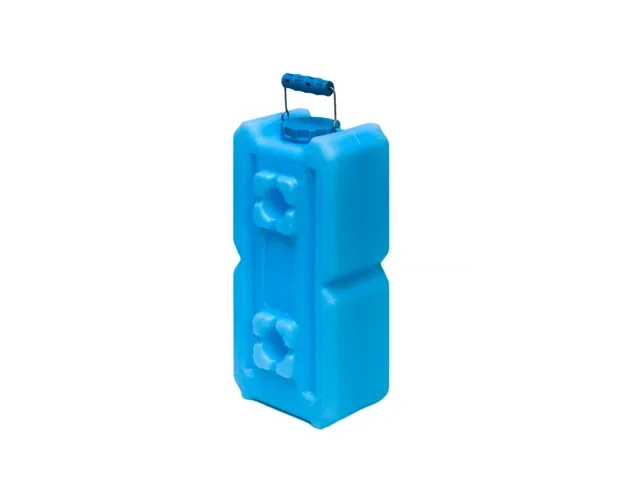
Modular storage when several smaller containers fit your space better than one large jug.
Space: 18 × 9 × 6 inches per container
Before buying: About 29 lb of water per full brick, plus the container. Smaller does not mean light. Check whether your chosen pack includes a dispensing spigot.
Version and setup details
Amazon link: six 3.5-gallon containers, 21 gallons total. Manufacturer link: two-pack, 7 gallons total. Dimensions and weight estimates are per container; the photo shows one unit. Follow manufacturer stacking instructions; keep heavy storage low and supported.
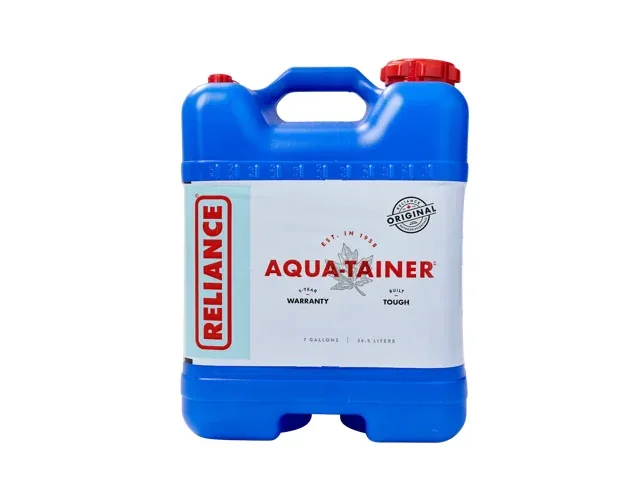
A larger refillable jug for a stable dispensing spot at home or transport by vehicle.
Space: 11.5 × 11.25 × 15.75 inches
Before buying: About 58 lb of water before the jug. Choose smaller containers if lifting that is difficult. Stack only when empty, according to Reliance.
Version and setup details
Amazon link: two 7-gallon jugs, 14 gallons total; dimensions and water-weight estimates on this page are per jug. Manufacturer link offers separate capacity variants: choose 7 gallons. Includes a reversible hideaway spigot. Manufacturer text and variant data differ on SKU and empty weight; match capacity and dimensions.
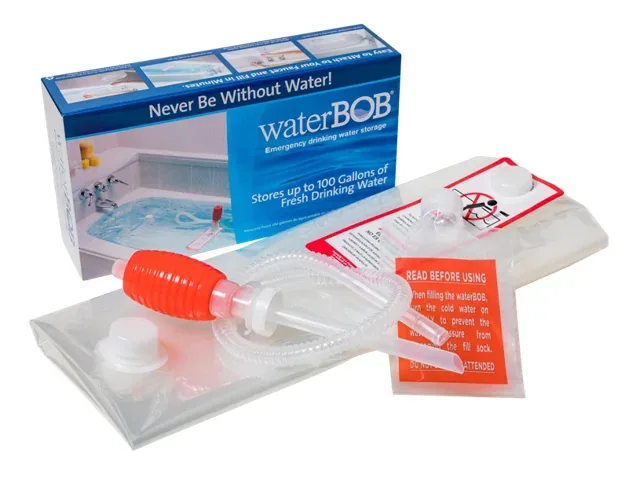
An extra temporary reserve when you have warning, a usable bathtub and safe running water.
Space: Up to 100 gallons; actual capacity depends on the bathtub
Before buying: Single use. It occupies the tub and cannot replace water already stored before a sudden outage. Do not fill above the tub rim.
Version and setup details
Includes a siphon pump. Fill in place before safe water service is interrupted. It is a storage liner, not a water-treatment device. Follow local drinking-water advisories.
Manufacturer information checked 2026-09-10. Manufacturer photo. Research-based selection, not hands-on testing.
Amazon buttons are affiliate links to the labeled package sizes. Manufacturer links provide version details. As an Amazon Associate I earn from qualifying purchases.
 WaterBrick · 3.5 gallons each
 Aqua-Tainer · 7 gallons each
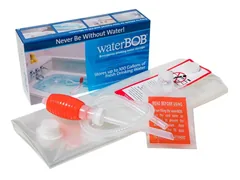 waterBOB bathtub liner
 (opens in a new tab)