Eat without cooking
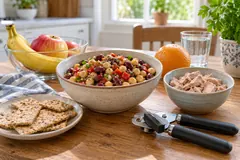
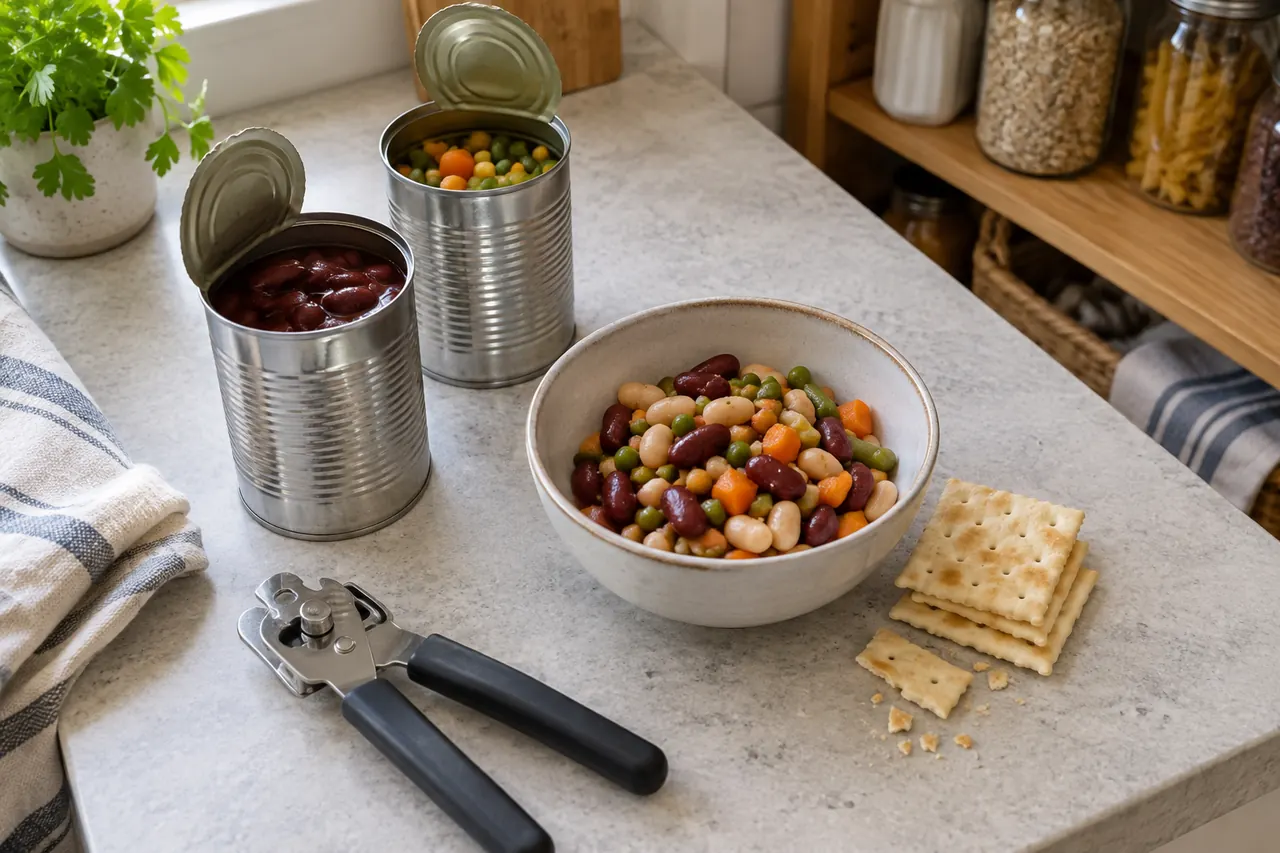
Reserve foods whose labels say they are ready to eat. Add a manual opener and utensils.
FOOD · PRACTICAL PREPAREDNESS
Make a short meal plan before buying a big box of supplies.
01
Start with foods your household already eats.
02
Check preparation, water and opening needs.
03
Use and replace supplies before their dates pass.
One place for food you can eat now. Another for ingredients that need water or cooking. Keep labels and dates visible.
6 breakfasts, 6 lunches, and 6 dinners. Plan snacks and drinks separately.
Organization aid: people × days × 3 meals. This does not calculate calories, nutrition, or package quantities. Match portions and dietary needs to each person; package “servings” are not meal equivalents.
Reserve foods whose labels say they are ready to eat. Add a manual opener and utensils.
Keep cooking-dependent ingredients separate. Count the safe water and a suitable cooking method they need.
Bring older suitable items forward. Replace foods as you use them, retaining preparation and allergen labels.
| Approach | Why choose it | Check first |
|---|---|---|
| Ordinary pantry foods | Familiar tastes; buy a little at a time. | Weight, dates, opened-food storage, and cooking requirements. |
| Freeze-dried meal pouches | Compact portions and convenient preparation for some uses. | Actual calories, allergens, sodium, water and heat, labeled storage life. |
| Large emergency food kits | A preselected collection can simplify shopping. | How many real meals you will eat—not just an advertised serving count. |
Keep trusted brands and readable ingredient labels. Plan food for each person’s actual diet, textures, and portion needs. Infant feeding and medically prescribed diets need their own plan; ask the relevant care professional before substituting unfamiliar emergency foods. Include pet food separately.
As an Amazon Associate I earn from qualifying purchases. Buttons labeled “View on Amazon” open specific listings; “Find on Amazon” opens a search. Check the exact item, seller, label, and current terms before buying. We do not display Amazon prices.
Open the food
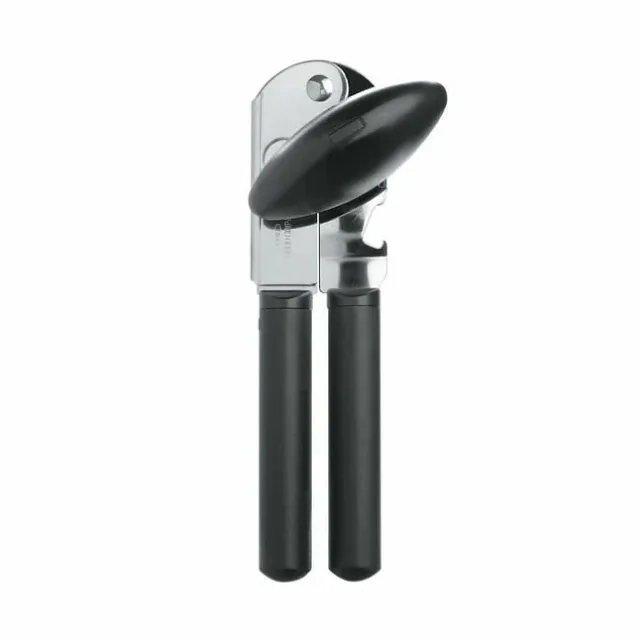
A manual opener works without power. Try the grip with your household before relying on it.
Consider: Manual operation still requires grip strength; consider easy-open food if that is difficult.
View on Amazon ↗ (opens in a new tab)Manufacturer details & photo source (opens in a new tab)Everyday reserve
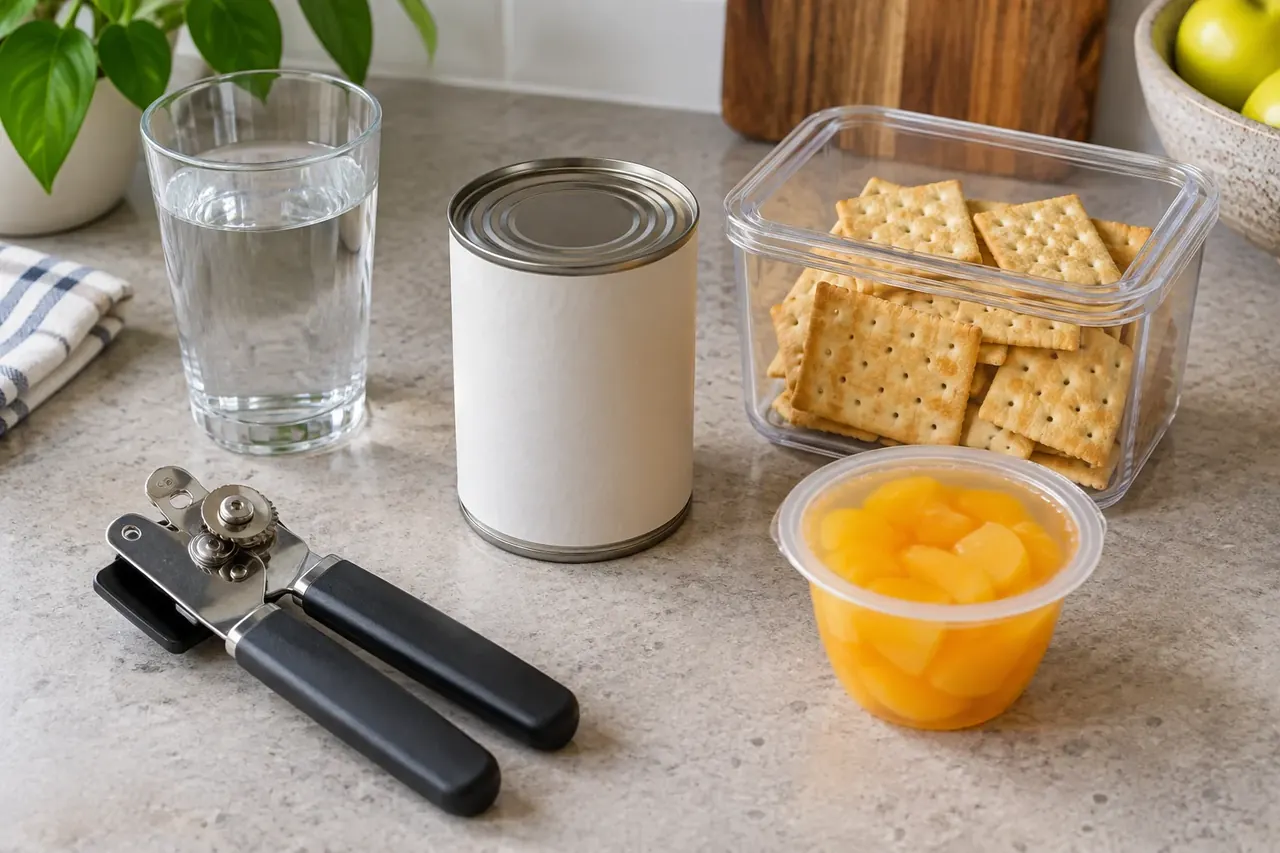
Choose familiar canned beans, fish or chicken pouches, crackers, and fruit cups.
Consider: Check allergens, portion sizes, sodium, and whether the label requires cooking.
Find on Amazon ↗ (opens in a new tab)Optional extra
Individual pouches let you try taste and portion size before buying a large supply.
Consider: Count water and any heat needed. A listed serving is not necessarily a full meal for you.
Find on Amazon ↗ (opens in a new tab)Research-based starting options, not hands-on tests or an exhaustive ranking. Category searches are shopping aids, not endorsements of every result. Buy only to fill a specific gap.
Sources checked September 10, 2026. Survivor Ready uses AI-assisted drafting and illustrative imagery. This guide has not received independent expert review. Follow local emergency instructions. General information does not replace advice tailored to your household.
List familiar shelf-stable food and find your manual opener.
FILLPlan meals everyone can eat, including any water or heat needed.
UPGRADECompare food choices after you know the meals you need.
A way to set priorities, not a readiness score. Essential needs can require purchases or professional help.
Compare pantry food, meal pouches and buckets by calories, water and useful portions.
Food & water
Walk through a familiar shelf-stable meal and check its water, tools and preparation needs before building a larger reserve.