Household planning
Can someone else use your household plan?
Try a simple handover of contacts, supplies and responsibilities so the plan does not depend on one person being home.
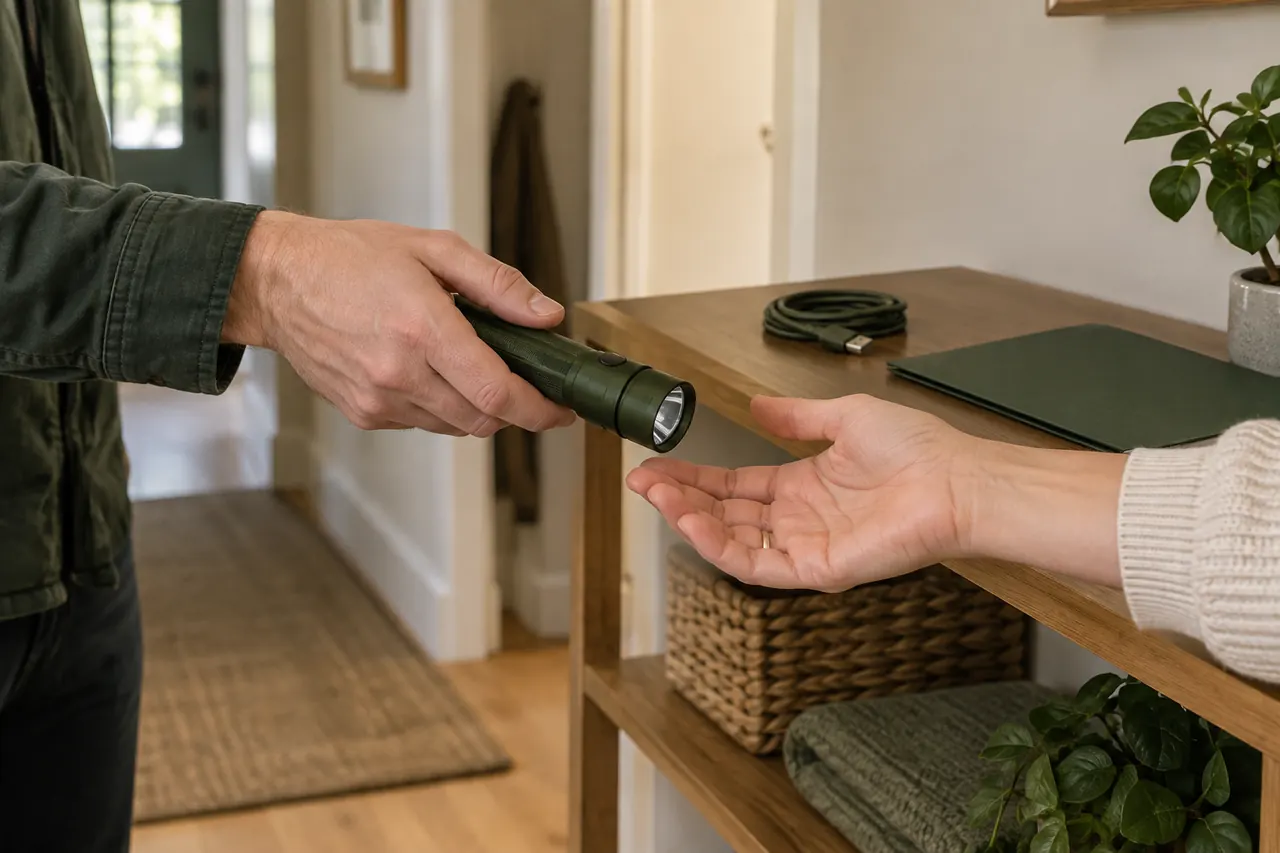
Find the information that lives in one person’s head
One person often knows where the charging cable belongs, which folder holds the contacts and who agreed to help. That knowledge is useful, but it can leave a gap when that person is away or unavailable.
The Red Cross recommends discussing likely emergencies, assigning household responsibilities and practicing the plan. It also asks families to consider how their arrangements change when someone is away. The exercise below is our suggested way to turn that advice into an ordinary household conversation.
Try a calm, five-minute handover
Choose a convenient time and explain that this is a check of the setup, not a test of the person. Ask someone to locate the contact list, a working light and the phone charging equipment you would use. Let them say what they expected to find and what was unclear.
Keep the exercise limited to familiar, ordinary items. It is not a reason to operate unfamiliar electrical equipment, handle weapons or change medical arrangements. Those needs belong in their own appropriately supported plans.
01
Locate
Can the other person find the item or information?
02
Explain
Do they know its job and what matching parts are needed?
03
Improve
Choose one change that makes the next attempt easier.
Give responsibilities a backup
A named helper is only useful if they have agreed and can do the job. Discuss availability, access and what happens if they cannot help. Avoid assuming a neighbor or relative can take on transport or care responsibilities without a conversation.
Use this blank table on paper or in your own private notes. Do not put passwords, access codes or sensitive household records in a public document.
| Task | Usual person | Agreed backup | Information or access needed |
|---|---|---|---|
| Find contacts and meeting-place information | ________ | ________ | ________ |
| Locate lights and matching power supplies | ________ | ________ | ________ |
| Coordinate transport if needed | ________ | ________ | ________ |
| Account for pets or individual support needs | ________ | ________ | ________ |
Make the setup fit the people
Ask each person what format and location work for them. A label, a simpler folder name or a more accessible storage place may help more than another purchase. If the household uses more than one language, agree how essential information will be shared.
Keep matching cables and other ordinary accessories easy to identify while following the manufacturer’s storage instructions. Do not assume that three found items make a complete kit. Use the household checklist to review the wider picture, and the accessible planning guide for support and communication questions.
Finish with one change
Choose the most useful improvement you found: move a light, update a contact, label a cable or confirm a backup helper. Tell everyone affected by the change where the updated information lives.
Arrange another brief review when people, routines or storage locations change. The goal is a plan that someone else can understand and use. There is no score, and no shopping requirement.
Sources checked September 11, 2026. General preparedness information, not individualized emergency or medical advice. Follow current local instructions. Our editorial approach.