Home resilience
Home battery or standby generator: start with the job
Before comparing brands, write down what you need to keep running and the questions an installer must answer.
Write a short description of the interruption
“Keep the house running” leaves a lot open to interpretation. Try a more concrete brief: “During an outage, I want to keep a few lights, communications equipment and the refrigerator operating.” Then list any other household systems you want a professional to evaluate. A well pump, heating system or other fixed equipment may change the proposal.
This is a suggested planning exercise. You are describing your needs, not designing an electrical system. Separate essentials from conveniences so an installer can explain the choices. If powered medical equipment is involved, work with the equipment supplier and care team on a separate backup and relocation plan.
Understand the basic difference
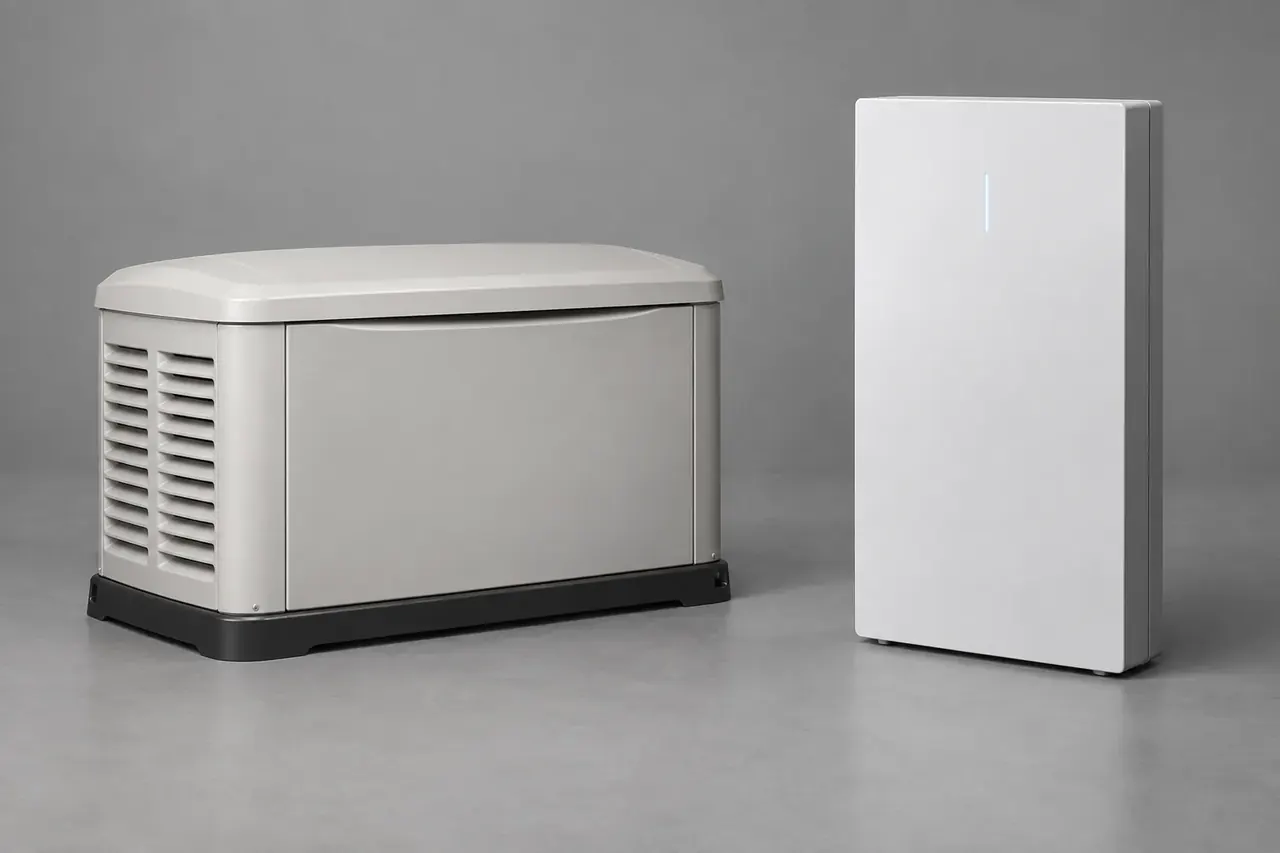
A home battery stores electricity for later use. For example, Tesla describes Powerwall (opens in a new tab) as storing energy from solar or the grid. A standby generator produces electricity using fuel. Generac describes its home standby systems (opens in a new tab) as using natural gas or propane and an automatic transfer switch.
These manufacturer pages explain their own systems; they are not independent comparisons or endorsements. The useful questions are broader than the brand: What can the proposed system support? How long? What must remain available for it to keep working?
HOME BATTERY
Store → use → recharge
Ask what usable energy is available, which loads are supported and how recharging works during an outage.
STANDBY GENERATOR
Fuel → generate → maintain
Ask which fuel supply is required, which loads are supported and what servicing and operating limits apply.
Ask the same four questions of both proposals
- What is included in backup? Ask for a named list of circuits or loads, with any restrictions on simultaneous use.
- What supports the duration estimate? Ask what usage, starting conditions and replenishment assumptions the installer used. Request an explanation in ordinary language.
- What happens when an assumption fails? Ask about depleted storage, unavailable fuel or charging, and loss of supporting services.
- What must I do? Ask about operation, monitoring, maintenance and getting help.
Do not treat a broad “whole home” label as the answer to those questions. Ask the provider to connect the promise to your actual household needs in writing.
Look at the installation as a separate decision
The equipment is part of a property-specific project. Ask about siting, existing equipment, local approvals, electrical work and any other work needed to deliver the proposed result. A qualified installer should explain which parts require further assessment and which costs are still allowances.
For an example of how an installation is scoped, Generac’s installation overview (opens in a new tab) describes a site consultation, fuel connection, transfer equipment and an outage simulation before completion. Your proposal needs its own written scope.
A portable power station is a separate option for suitable individual loads. Our backup-power options guide explains the broader categories. This article does not provide wiring or installation instructions.
Keep an alternative plan
The Red Cross’s outage guidance emphasizes preparing for disrupted services and power-dependent needs. An equipment purchase should fit that wider plan.
Your next step: complete the first two parts of the upgrade planner. Bring the same brief to each provider, and ask them to identify what the proposed system will not do. You may find that a smaller project meets your needs, or that professional assessment should come before any purchase.
Sources checked September 11, 2026. General preparedness information, not individualized emergency or medical advice. Follow current local instructions. Our editorial approach.